
What Are the Best Tech Jobs for Veterans? (Hint: It's Not Coding)
- Tony Grayson
- Jan 4
- 10 min read

Updated: Jan 7
By Tony Grayson, President & GM of Northstar Enterprise + Defense | Former U.S. Navy Nuclear Submarine Commander | Stockdale Award Recipient | Veterans Chair, Infrastructure Masons
Published: January 3, 2026 | Updated: January 7, 2026 | Verified: January 7, 2026

QUICK ANSWER FOR TECH JOBS FOR VETERANS
"The best tech jobs for veterans are in data center operations, not software. The AI revolution needs physical infrastructure. 650,000 jobs by 2026, 58% talent shortage.
• Data Center Technician: $70K-$95K (entry)
• Critical Facilities Engineer: $100K-$130K (mid)
• Critical Facilities Manager: $140K-$180K (senior)
• Director/VP Infrastructure: $180K-$250K+ (exec)
+ TS/SCI clearance adds $20K-$30K premium
Skip the coding bootcamp. Get CDCP certification instead." - Tony Grayson, Former Submarine Commander
COMMANDER'S INTENT TECH JOBS FOR VETERANS
This article will show you why data center operations—not coding—is the highest-ROI
career path for veterans with technical military backgrounds. You'll get:
• The real salary data by experience level and military background
• Which military rates (Navy, Army, Air Force) translate best
• A comparison: coding bootcamp vs. data center career
• A 3-step action plan you can start this week
• The companies actively hiring veterans right now
Time to read: 10 minutes. Time to act: 2-4 weeks to first certification.
Why Do Career Counselors Tell Veterans to Learn Coding?
Tony Grayson says it is because they don't know any better, and it's costing veterans years of career momentum. The junior developer market is saturated with CS graduates who've been coding since middle school. For most veterans with technical military backgrounds, learning Python is starting from zero in a race you're already losing.
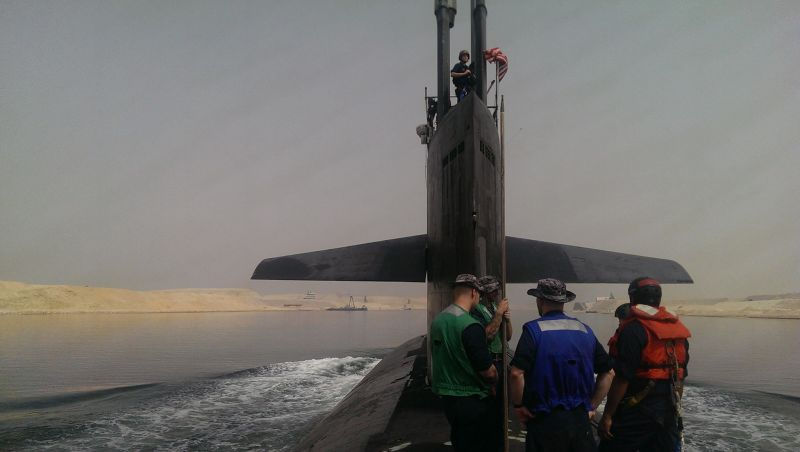
I once handed the keys to a nuclear reactor (metaphorically) to a 19-year-old kid. He was a Nuclear Machinist Mate, covered in grease, hadn't slept much, and we were 500 feet underwater. But I trusted him with my life because he understood systems. He knew that if Valve A didn't open, Pump B would cavitate, and metaphorically, a 19-year-old would have a very bad day.
Today, that same kid gets out of the Navy, and every career counselor tells him, "Go learn Python." So he spends his GI Bill on a coding bootcamp and enters a job market where he's competing against people who've been coding for a decade.
There's a better path. The AI revolution isn't just software, it's physical infrastructure. And the tech world is desperate for people who can keep the lights on.
Watch: From Submarine to Data Center
Why Do Data Centers Hire Veterans?
Data centers hire veterans because military training produces exactly the skills Mission Critical Environments require: operational discipline, procedural compliance, systems thinking, and calm under pressure. These skills cannot be taught in a bootcamp or a 4-year degree—they're developed through years of military service in high-stakes environments.
In the Navy, when things got dangerous, we would "Rig for Deep." It meant securing the ship and focusing on the mission. Most civilian workplaces don't operate this way—when something breaks, people scramble. Data centers are different. A single mistake can cost millions of dollars per minute.
Think of an AI data center as a submarine's operations—without the ocean. Both demand: massive power distribution, liquid cooling loops, backup generators, strict security protocols, and 24/7 vigilance. When a server hall overheats, they need protocol, not improvisation. That's you.
What Military Skills Transfer to Data Center Jobs?
Military skills that transfer directly include: systems thinking, procedural compliance, 24/7 operational discipline, crisis management, and managing complex equipment under pressure.
Power distribution management — Nuclear MMs, EMs, and ETs understand electrical systems that dwarf civilian experience
Cooling systems — Submarine cooling loops are direct analogs to data center liquid cooling
Watch standing / 24/7 operations — NOC and facilities operations require the same vigilance
Procedural compliance (MOPs/SOPs) — Data centers run on procedures, just like the military
Crisis response under pressure — When systems fail, you follow protocol, not panic
Coding Bootcamp vs. Data Center Career: Which Is Better for Veterans?
Data center careers are typically better for veterans with technical military backgrounds because they leverage existing experience rather than requiring you to start from scratch in a saturated market.
Factor | Coding Bootcamp | Data Center Career |
Time to Job | 6-12 months training + job search | 2-4 weeks (certs) + job search |
Entry Salary | $55K-$75K | $70K-$95K |
Competition | High (CS grads + bootcamp grads) | Low (58% talent shortage) |
Military Experience Value | Minimal (starting fresh) | High (direct skill transfer) |
Clearance Premium | $0-$10K | $20K-$30K |
5-Year Ceiling | $100K-$140K | $140K-$180K+ |
Degree Required? | Often preferred | No |
What Is the Salary for Data Center Jobs?
Data center salaries range from $70,000 at entry to $250,000+ at executive level, with clear progression. Veterans typically advance faster than civilian peers due to operational backgrounds. Ranges shown for Tier 1 markets (Northern Virginia, Dallas, Phoenix).
THE OPPORTUNITY BY THE NUMBERS
650,000 — Data center jobs available by 2026
30% — Increase in employment from 2023
58% — Operators who can't find qualified talent
$300B+ — Hyperscaler infrastructure spending
Sources: ENR, Uptime Institute, IEEE Spectrum
Role | Salary | Experience | Best Military Background |
Data Center Technician | $70K-$95K | Entry (0-2 yrs) | MM, EM, ET, IC, FC, GSE |
Field Service Engineer | $75K-$100K | Entry (0-2 yrs) | GSE, GSM, EM, MM, EN |
Critical Facilities Engineer | $100K-$130K | Mid (2-5 yrs) | Nuke MM/EM/ET with quals |
Controls/BMS Engineer | $95K-$125K | Mid (2-5 yrs) | ET, FC, IC |
Critical Facilities Manager | $140K-$180K | Senior (5-10 yrs) | EOOW/EWS quals, CPOs |
Director/VP Infrastructure | $180K-$250K+ | Executive (10+ yrs) | Dept Heads, XOs, COs |
How Much Is a Security Clearance Worth in Data Center Jobs?
A TS/SCI security clearance is worth $20,000-$30,000 in additional annual salary for data center jobs in defense and sovereign cloud sectors. Clearances cost employers $15,000+ to obtain, take 12-18 months, and have a 30%+ denial rate. If you already have one, you have an asset most civilian candidates simply cannot match.
Companies that pay clearance premiums:
Defense contractors: Northrop Grumman, Lockheed Martin, General Dynamics, Raytheon
GovCloud providers: AWS GovCloud, Azure Government, Google Public Sector, Oracle Government
Government facilities: National labs, DOE sites, intelligence community data centers
Defense infrastructure: Northstar Enterprise + Defense (SCIF-rated modular AI infrastructure)
What Certifications Should Veterans Get for Data Center Jobs?
Veterans should get practical infrastructure certifications, not coding certifications. Start with safety certs (OSHA, EPA 608), add industry certs (CDCTP, CDCP), then pursue advanced credentials (CEM, PMP) for management. Total timeline: weeks, not months.
Cert | Purpose | Stage | Time |
Workplace safety fundamentals | Entry (get first) | 3 days | |
Refrigerant handling (cooling) | Entry (get first) | 1 day | |
Data Centre Technician Professional | Entry | 2-3 days | |
Certified Data Centre Professional | Mid-level | 2 days | |
Electrical safety in workplace | Mid-level | 1-2 days | |
Certified Energy Manager | Senior/Management | 4-5 days | |
Project Management Professional | Senior/Management | 35+ hours |
How Do I Transition from Military to a Data Center Career?
Follow this 3-step action plan: translate your resume, stack infrastructure certifications, and target the right companies. You're translating your skills, not reinventing yourself.
Step 1: Translate Your Military Resume
Rewrite every bullet in civilian impact language. Hiring managers don't know what an EOOW is—but they understand "Certified to operate mission-critical systems in 24/7 environment."
Before: "Maintained propulsion plant"
After: "Managed Mission-Critical Liquid Cooling Infrastructure for $2B Asset"
Before: "Qualified EOOW"
After: "Certified to operate complex electrical/mechanical systems in 24/7 mission-critical environment."
Step 2: Stack Certifications (Weeks, Not Months)
Get quick-win credentials employers recognize:
1. Week 1: OSHA 30 + EPA 608 (safety baseline)
2. Week 2-3: CDCTP (data center technician credential)
3. Month 2-3: CDCP (industry standard)
4. Year 2+: CEM, NFPA 70E, PMP (management track)
Step 3: Target Infrastructure Companies
Apply to companies building the physical internet—not software startups:
Colocation providers: Equinix, Digital Realty, QTS, CyrusOne, DataBank
Hyperscalers: AWS, Microsoft, Google, Oracle
Equipment OEMs: Vertiv, Schneider Electric, Eaton, Caterpillar
Defense/Sovereign: Northstar Enterprise + Defense, Northrop Grumman, Lockheed Martin
Veteran resources: Infrastructure Masons (networking), Salute Mission Critical (veteran staffing)
"Think of an AI data center as a submarine's operations—without the ocean. Both demand massive power distribution, liquid cooling, backup generators, and strict protocols. When a server hall overheats, they need protocol, not improvisation. That's you."
— Tony Grayson, former Commanding Officer, USS Providence (SSN-719)
Key Takeaways
1. Data center operations offers better ROI than coding bootcamps for veterans with technical military backgrounds
2. Salaries range from $70K (entry) to $250K+ (executive) with clear career progression
3. TS/SCI clearances add $20K-$30K annual premium in defense and sovereign cloud
4. Get infrastructure certifications: OSHA, EPA 608, CDCP, CEM—not Python
5. Target infrastructure companies: Equinix, Digital Realty, QTS, Northstar—not software startups
6. 650,000 data center jobs by 2026 with 58% talent shortage—the opportunity is real
Frequently Asked Questions
What Air Force AFSC or Army MOS translates to data center jobs?
Best Air Force AFSCs include: 3E0X1 (Electrical), 3E1X1 (HVAC), 3D1X2 (Cyber Transport), 2A6X6 (Electrical/Environmental). Best Army MOS include: 12P (Prime Power Production), 12R (Interior Electrician), 91D (Power Generation), 94F (Special Electronic Devices Repairer), 25B (IT Specialist). These backgrounds map directly to critical facilities roles.
Can I get a data center job without a security clearance?
Yes—most commercial data center roles don't require clearances. Companies like Equinix, Digital Realty, QTS, AWS (commercial), and Google hire based on skills, not clearance status. The clearance premium ($20K-$30K) only applies to defense contractors, GovCloud, and classified facilities. If you don't have a clearance, target the commercial sector first.
Are there remote data center jobs?
Most operations roles require on-site presence, but some paths offer flexibility. Remote-friendly roles include: NOC Analyst (remote monitoring), Data Center Design Engineer, Capacity Planning, and Controls/BMS Programming. Field Service Engineers travel to sites but aren't based at one location. Management roles (Director+) often allow hybrid arrangements.
How do I network in the data center industry?
Start with Infrastructure Masons (iMasons) — it's the industry's largest non-profit with a dedicated veterans program. I chair the Veterans group and we've helped 100+ service members transition. Other resources: Data Center Dynamics events, Salute Mission Critical (veteran-focused recruiter), and LinkedIn groups like "Data Center Professionals" and "Critical Facilities Operations."
What is a Critical Facilities Manager?
A Critical Facilities Manager oversees the physical infrastructure of mission-critical environments—primarily data centers. Responsibilities include: power distribution, cooling systems (increasingly liquid cooling for AI), backup generators, fire suppression, physical security, and team leadership. Salary: $140K-$180K+ at senior levels. No degree required—operational excellence matters more.
What's the job outlook for data center careers?
The data center job market is experiencing unprecedented growth. 650,000 jobs by 2026 (30% increase from 2023). 58% of operators can't find qualified talent. AI workloads are driving $300B+ in infrastructure expansion from hyperscalers alone. This demand is expected to continue for at least the next decade as AI inference scales globally.
What are the best tech jobs for veterans?
The best tech jobs for veterans are in data center operations, not software development. Data center roles leverage military skills directly: systems thinking, procedural compliance, 24/7 operational discipline, and crisis management. Entry-level data center technicians earn $70K-$95K with clear progression to $140K-$180K at senior levels. Unlike coding bootcamps where you're starting from zero, data center careers translate your existing military experience into immediate value.
Why do data centers hire veterans?
Data centers hire veterans because military training produces exactly the skills Mission Critical Environments require: operational discipline, procedural compliance, systems thinking, and calm under pressure. These skills cannot be taught in a bootcamp or a 4-year degree—they're developed through years of military service in high-stakes environments. When a server hall overheats, data centers need protocol, not improvisation. That's what veterans bring.
What military skills transfer to data center jobs?
Military skills that transfer directly include: power distribution management (Nuclear MMs, EMs, ETs), cooling systems expertise (submarine cooling loops are direct analogs to data center liquid cooling), watch standing and 24/7 operational discipline, procedural compliance (MOPs/SOPs), and crisis response under pressure. The transition isn't about learning new skills—it's about translating the ones you already have.
How much is a security clearance worth in data center jobs?
A TS/SCI security clearance is worth $20,000-$30,000 in additional annual salary for data center jobs in defense and sovereign cloud sectors. Clearances cost employers $15,000+ to obtain, take 12-18 months, and have a 30%+ denial rate. Companies paying clearance premiums include defense contractors (Northrop Grumman, Lockheed Martin), GovCloud providers (AWS GovCloud, Azure Government), and defense infrastructure companies like Northstar Enterprise + Defense.
What certifications should veterans get for data center jobs?
Veterans should get practical infrastructure certifications, not coding certifications. Start with safety certs (OSHA 30, EPA 608) in Week 1, add the CDCTP (Certified Data Centre Technician Professional) in Weeks 2-3, then pursue CDCP (Certified Data Centre Professional) by Month 2-3. For the management track, add CEM (Certified Energy Manager) and PMP. Total timeline: weeks, not months—unlike a 6-12 month coding bootcamp.
Is coding bootcamp or data center career better for veterans?
Data center careers are typically better for veterans with technical military backgrounds because they leverage existing experience rather than requiring you to start from scratch. Coding bootcamps take 6-12 months and lead to $55K-$75K entry salaries in a saturated market. Data center certification takes 2-4 weeks and leads to $70K-$95K entry salaries with a 58% talent shortage. Your military experience has minimal value in coding but high value in data centers.
Related Reading from The Control Room
Nuclear for Data Centers: Why the Gen IV SMR Timeline is 2035 — The engineering reality behind nuclear power for AI infrastructure.
AI Training vs. Inference: The $300B Shift Everyone is Missing — Understanding where the real infrastructure demand is heading.
The Illusion of Control: What Dying Taught Me About Living — Leadership philosophy forged in the submarine service.
The Submarine Dolphin Code — The unwritten rules that separate submariners from everyone else.
Sources
ENR / The Birm Group — Data center employment forecast: 650,000 jobs by 2026
Uptime Institute — 58% of operators face staffing challenges
Infrastructure Masons — Global digital infrastructure non-profit with veteran programs
CNet Training — CDCTP and CDCP certification programs
Association of Energy Engineers — CEM (Certified Energy Manager) certification
About the Author
Tony Grayson is President & General Manager of Northstar Enterprise + Defense and a former U.S. Navy Nuclear Submarine Commander (USS Providence SSN-719). He previously served as SVP of Physical Infrastructure at Oracle, managing a $1.3B budget and 1,000+ person team, and held senior executive roles at AWS and Meta.
Tony is a recipient of the Vice Admiral James Bond Stockdale Award for Inspirational Leadership and serves as Veterans Chair for Infrastructure Masons, where he has helped transition 100+ veterans into technology careers. He is recognized as a Top 10 Data Center Influencer.
Subscribe to The Control Room for more insights on AI infrastructure, leadership, and veteran career transition.

Comments