
What Is the Dolphin Code? Why Submariners Are the Original Corporate Trolls
- Tony Grayson
- Dec 29, 2025
- 9 min read

Updated: Jan 6
By Tony Grayson, President & GM of Northstar Enterprise + Defense | Built & Exited Top 10 Modular Data Center Company | Top 10 Data Center Influencer | Former SVP Oracle, AWS & Meta | U.S. Navy Nuclear Submarine Commander (USS Providence SSN-719) | Stockdale Award Recipient
Published: December 29, 2025 | Updated: January 6, 2026 | Verified: January 6, 2026 |
TL;DR:
"The Dolphin Code is a semi-official collection of sarcastic shorthand signals Royal Navy submariners use to mock surface ships during training exercises.
Example - Code 31: "The adverse weather is affecting us greatly: The movie projector has tipped over twice." Translation: Surface ships get tossed by storms while submarines sit calm at depth, watching movies.
It's not just humor—it's cognitive reappraisal, group identity reinforcement, and a pressure valve. If your team stops laughing, you've already lost.
Remember, a bitching Sailor is a happy Sailor."
— Tony Grayson, former Commanding Officer, USS Providence (SSN-719)
COMMANDER'S INTENT: THE SILENT SERVICE'S SECRET WEAPON
The Mission: Humanize the "Silent Service" by showcasing submarine culture's unique brand of wit and how it translates directly into leadership under pressure.
The Reality: Gallows humor isn't unprofessional. It's cognitive reappraisal (reframing stress), group identity reinforcement (who's in the club), and a pressure valve (saying what you can't say directly). The teams that laugh together last together.
The Tactical Takeaway: Use humor as a diagnostic tool. On the USS Providence, if the crew stopped joking about how bad the food was, I knew we were in actual trouble. Silence isn't focus; silence is resignation. If your team isn't laughing, they're not coping...and if they're not coping, they're not performing.
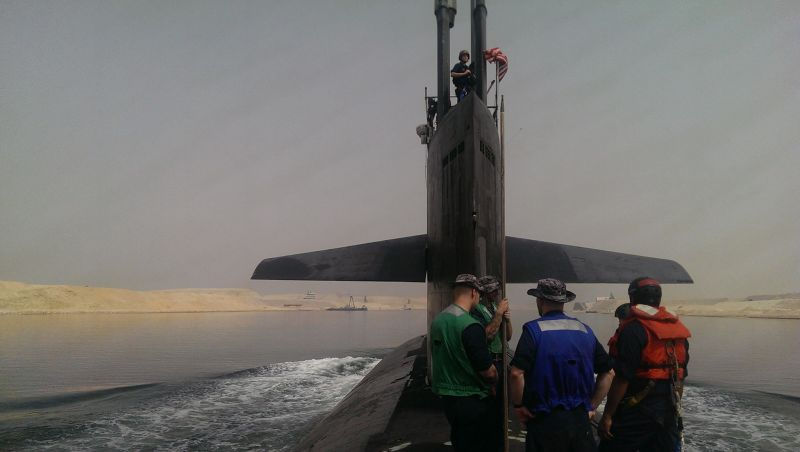
1. What Is the Origin of the Dolphin Code?
The Dolphin Code originated in the Royal Navy submarine service as a semi-official way to communicate sarcastically with surface ships.
This is one of my favorite sea stories I heard from a friend when I just joined the Navy: It was 0300. We were 400 feet below the North Atlantic, running a joint exercise with a Royal Navy surface group. The destroyer above us had been chasing our periscope signature for six hours. They were frustrated. We were watching movies.
The radio crackled. The surface commander, clearly exhausted, sent a standard status request asking how the weather was affecting our operations.
Our communications officer looked at me. I nodded. He transmitted the response:
"Code 31: The adverse weather is affecting us greatly. The movie projector has tipped over twice."
Silence on the radio. Then, barely audible, laughter from the destroyer's bridge watch.
That was my introduction to the Dolphin Code, and to the realization that submarine force had turned passive-aggressive sarcasm into an actual communication protocol.
2. What Are the Top 10 Dolphin Code Signals?
The most famous Dolphin Code signals translate dry sarcasm into official-looking naval messages.
For the skimmers in the audience who need it spelled out:
Code | Official Signal | What It Really Means |
1 | Your surfacing procedure was understandably awful | We expected nothing and were still disappointed |
4A | Battery 100%. Will simulate nuclear if you wish | I'm better than you and we both know it |
7 | Commendable ability to practise basics | Participation trophy energy |
8 | The serial so bad we watched a double feature | Your exercise bored us into entertainment |
9 | Instructions are simple. Simply awful | Did anyone proofread this? |
15 | Won't ask you to fly wheels in water | Stay in your lane |
21 | Don't signal until you have something to say | This meeting could have been an email |
29 | Tracking without attacking is military masochism | Are we actually doing anything? |
31 | Weather affecting us: projector tipped twice | Sucks to be you up there |
65 | Barely enough fuel. Absolutely no beer. Priority obvious | Royal Navy priorities in one sentence |
3. How Does the Dolphin Code Apply to Corporate Leadership?
The same passive-aggressive clarity that makes the Dolphin Code effective in submarines applies to boardrooms as well.
If I could implement the Dolphin Code in my board meetings today, I would. Here's how I translate my favorite signals into corporate speak:
Code 21: "Please do not send any more signals until you have something to say."
→ Corporate: "This meeting could have been an email."
Code 1: "Your last surfacing procedure was understandably awful."
→ Corporate: "Per my last email, the Q3 projections were detached from reality."
Code 9: "Your exercise instructions are simple. Simply awful."
→ Corporate: "I have circled back, and I still don't understand the strategy."
Code 65: "Barely enough fuel to reach harbor. Absolutely no beer left. Priority is obvious."
→ Corporate: "We're out of budget and morale. Guess which one leadership will fix first."
4. Why Does Gallows Humor Work in High-Stress Teams?
Gallows humor works because it triggers cognitive reappraisal—the brain's ability to reframe stressful situations as less threatening by finding humor in them.
When you joke about the thing that scares you, you reduce its power over you.
But gallows humor does more than manage individual stress. It builds group identity. When submariners mock surface ships, they're reinforcing who they are: elite, technically superior, voluntarily confined to the deep. The joke is a badge of membership.
And it serves as a pressure valve. You can't scream at your commanding officer. You can't punch the bulkhead. But you can make a joke so dry it could dehumidify the torpedo room, and suddenly, the tension breaks.
5. How Do You Use Humor as a Leadership Diagnostic Tool?
Use humor as a canary in the coal mine—when teams stop joking about problems, they've moved from coping to resignation.
As Tony Grayson explains: "On the Providence, if the crew stopped joking about how bad the food was, I knew we were in actual trouble. Silence isn't focus; silence is resignation."
In my time at AWS and Oracle, I used humor as a diagnostic metric.
On the Providence, if the crew stopped joking about how bad the food was, I knew we were in actual trouble. Silence isn't focus; silence is resignation.
The same applies in boardrooms. If you walk into a war room during a crisis and it's dead silent, you've already lost. You need the guy who cracks the dark joke about the stock price plummeting. That guy breaks the tension so the rest of you can actually fix the problem.
If your team isn't laughing, they're not coping. And if they're not coping, they're not performing.
Some more specifics:
How to Use Humor as a Leadership Diagnostic Tool
Tony Grayson's method for using team humor as an early warning system, developed during command of USS Providence and refined at AWS and Oracle:
Step 1: Establish a Humor Baseline. Observe your team's normal level of gallows humor and joking about challenges. This becomes your baseline for measuring morale.
Step 2: Monitor for Silence When teams stop joking about problems, it's a warning sign. Silence isn't focus—it's resignation. If the crew stopped joking about how bad the food was, I knew we were in actual trouble.
Step 3: Recognize Humor's Functions. Understand that team humor serves three purposes: cognitive reappraisal (reframing stress), group identity (reinforcing membership), and pressure release (saying what can't be said directly).
Step 4: Encourage Appropriate Dark Humor. Don't suppress gallows humor during crises. The person who cracks the dark joke about the problem breaks the tension so others can actually fix it.
6. Key Takeaway
As Tony Grayson explains: "If your team isn't laughing, they're not coping. And if they're not coping, they're not performing."
1. The Dolphin Code is semi-official submariner sarcasm
2. Gallows humor = cognitive reappraisal + group identity + pressure release
3. Silent teams aren't focused—they're resigned
4. Humor is a leadership diagnostic tool, not unprofessionalism
5. If your team stops laughing, investigate immediately
Humor isn't just entertainment on submarines—it's survival.
When you're locked in a steel tube for months, unable to see sunlight or talk to your family, laughter becomes a pressure valve. The Dolphin Code isn't just jokes; it's a window into how elite teams cope with extraordinary stress.
The best leaders I've known understood that humor builds trust, relieves tension, and serves as an early warning system when things are going wrong.
If your team isn't laughing, they're probably not coping. And if you're a leader who thinks humor is unprofessional, you're missing one of the most powerful diagnostic tools in your arsenal.
Stay submerged. Stay sarcastic.
7. Your Turn
Drop your favorite boat joke in the comments. Best "I volunteered for this" moment. Worst Mail Buoy watch story. Stories of painting rocks. Let's hear it!
Key Takeaways:
1. The Dolphin Code is semi-official submariner sarcasm
2. Gallows humor = cognitive reappraisal + group identity + pressure release
3. Silent teams aren't focused—they're resigned
4. Humor is a leadership diagnostic tool, not unprofessionalism
5. If your team stops laughing, investigate immediately
———
Related from The Control Room:
Thanksgiving Deployed Military Tribute — The true cost of service
The Cognitive Dissonance of Leadership — Why self-preservation is your team's blind spot
The Great Lie: The Illusion of Control in Leadership — Why we sacrifice today for a tomorrow that never comes
Why I Stopped Reading Leadership Books — The case for contextual intelligence
Frequently Asked Questions
What is the Dolphin Code?
The Dolphin Code is a humorous collection of shorthand signals used by Royal Navy submariners to communicate sarcastically with surface ships during training exercises. While formatted like official naval communications, the messages are satirical commentary on exercise quality, surface ship performance, and the superiority of submarine operations. It's semi-official, derived from real signaling formats but used informally to build camaraderie.
Why is submarine service called the Silent Service?
Submarines operate in total secrecy—locations, missions, and capabilities are highly classified. Submariners never discuss operational details, even with family. This culture of discretion extends to their understated, dry humor. They don't brag; they make quiet jokes that only insiders understand.
What's the rivalry between submariners and surface sailors?
Submariners call surface ships "targets" (reflecting submarine warfare doctrine—in combat, surface ships are vulnerable to submarine attack) and surface sailors "skimmers" (implying they skim the surface while real sailors work below). Surface sailors call submariners "bubbleheads." The rivalry is mostly good-natured—both groups respect the other's technical skills while mercilessly mocking their lifestyle choices.
How long do submarines actually stay underwater?
Nuclear submarines can stay submerged for 90+ days, limited only by food supplies and crew endurance. Diesel submarines must surface every few days to recharge batteries—which is why so many Dolphin Code jokes mock battery status. This difference fuels persistent rivalry between nuclear and diesel boat crews as well.
Why is submarine humor so dark?
Extended isolation without sunlight, limited family contact, constant nuclear vigilance, and 150 people in close quarters for months. Gallows humor serves three functions: cognitive reappraisal (reframing stress), group identity (reinforcing membership in an elite club), and pressure release (saying what you can't say directly). If you can't laugh about it, you'll crack.
Who is Tony Grayson?
Tony Grayson is President & General Manager of Northstar Enterprise + Defense, a company building modular, AI-optimized data centers. He previously served as SVP of Physical Infrastructure at Oracle, AWS, and Meta. Tony is a former U.S. Navy nuclear submarine commander (USS Providence SSN-719) who spent 20 years in the submarine force and is a recipient of the Vice Admiral James Bond Stockdale Award for Inspirational Leadership—the Navy's highest honor for inspirational leadership.
What does Code 31 mean in the Dolphin Code?
Code 31 means "The adverse weather is affecting us greatly: The movie projector has tipped over twice." It's a sarcastic signal that submariners use to mock surface ships being tossed by storms while submarines remain calm at depth, watching movies.
Can humor improve team performance?
Yes. Tony Grayson used humor as a leadership diagnostic at AWS, Oracle, and aboard USS Providence. Research shows that gallows humor serves as cognitive reappraisal (stress reframing), group identity reinforcement, and a pressure-release valve. If your team stops laughing, they've moved from coping to resignation.
———
About the Author
Tony Grayson is a recognized Top 10 Data Center Influencer, a successful entrepreneur, and the President & General Manager of Northstar Enterprise + Defense.
A former U.S. Navy Submarine Commander and recipient of the prestigious VADM Stockdale Award, Tony spent 20 years in the submarine force before transitioning to Fortune 500 technology leadership. He led global infrastructure strategy as a Senior Vice President for AWS, Meta, and Oracle before taking over a failing modular data center company, scaling it to $200M+ in contracts, and selling it to Northstar in 2025.
Read more at: tonygraysonvet.com
Sources
The Dolphin Code - RN Subs: Official archive of Royal Navy submarine signals
Note: The Dolphin Code is part of the unofficial/semi-official lore of the Royal Navy Submarine Service
Author's personal experience: 20 years U.S. Navy submarine force, including command of USS Providence (SSN-719)


During a long deployment, 100 days in a stretch in 1999, an FTSN sitting the sonar stack turns and says to another operator "Do you see that white stuff in the baffles? That's the command pumping morale overboard". Needless to say, it was in the deployment book. John Jors should know which FT that was.